
The Role of Planes in Luthiery
Planes are hand tools used to shave thin layers of wood, allowing a luthier to refine, smooth, and shape the surface of an instrument. The role of a plane in luthiery is to remove small amounts of material at a time to achieve smoothness, flatness, and curvature where required. A luthier might use a plane to:
- Level and flatten surfaces – Ensuring flatness of the guitar’s body, violin tops, or necks.
- Smooth out irregularities – Removing rough spots or inconsistencies in the surface of the wood.
- Shape curves – Such as the rounded edge of a guitar body or the compound curves of a violin’s back.
- Fine-tune joints – For example, shaping the neck to body joint or ensuring the smooth fit of the fretboard.
- Create and refine contours – Such as the carving of the instrument’s neck profile, shaping the shoulders or heel, or smoothing the back of a violin or cello.
Planes offer greater control and precision than other tools, and they are especially valuable for ensuring smooth, even surfaces. The tactile feedback from the plane also allows the luthier to assess the wood’s response, providing the necessary nuance when creating an instrument.
Types of Planes Used in Luthiery
There are many types of planes, each designed for specific tasks in luthiery. While all planes are designed to shave thin layers of wood, they vary in size, shape, and the type of cut they produce. Below are the most common types of planes used in luthiery:
Block Plane
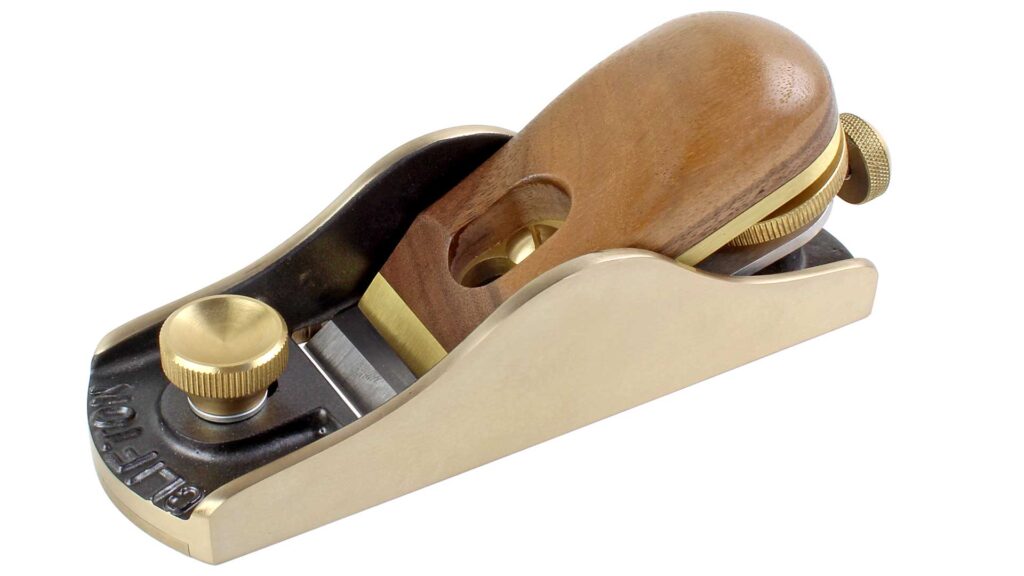
The block plane is a small, versatile plane typically used for smoothing small areas, trimming wood, and fine-tuning joints. It is often favored for its ease of use and portability. The blade of a block plane is set at a low angle, which makes it excellent for working with softwoods or delicate materials.
- Uses:
- Smoothing the edges of a guitar’s body or trimming a neck joint to fit properly.
- Removing small amounts of material from delicate parts, such as fingerboards or inlay surfaces.
- Cleaning up rough edges after cutting or sanding, ensuring a smooth and uniform finish.
Block planes are ideal for fine-tuning the final dimensions and making precise adjustments to smaller surfaces. Their compact size also makes them well-suited for working in tight spaces or on small, detailed areas.
Jack Plane

The jack plane is a medium-sized plane that is designed for general shaping and smoothing of larger surfaces. With a blade set at a steeper angle, the jack plane can handle rougher work and is typically used during the initial stages of wood shaping. It can quickly remove material from flat surfaces or begin the rough shaping of curves.
- Uses:
- Flattening larger areas of wood, such as the back or sides of a guitar.
- Shaping the neck of an instrument before finer tools are used.
- Removing large imperfections or uneven surfaces early in the process of building an instrument.
The jack plane is versatile enough to be used for both rough work and finer shaping, making it an essential tool in a luthier’s kit. It is especially useful for smoothing larger surfaces before using more specialized planes.
Smoothing Plane
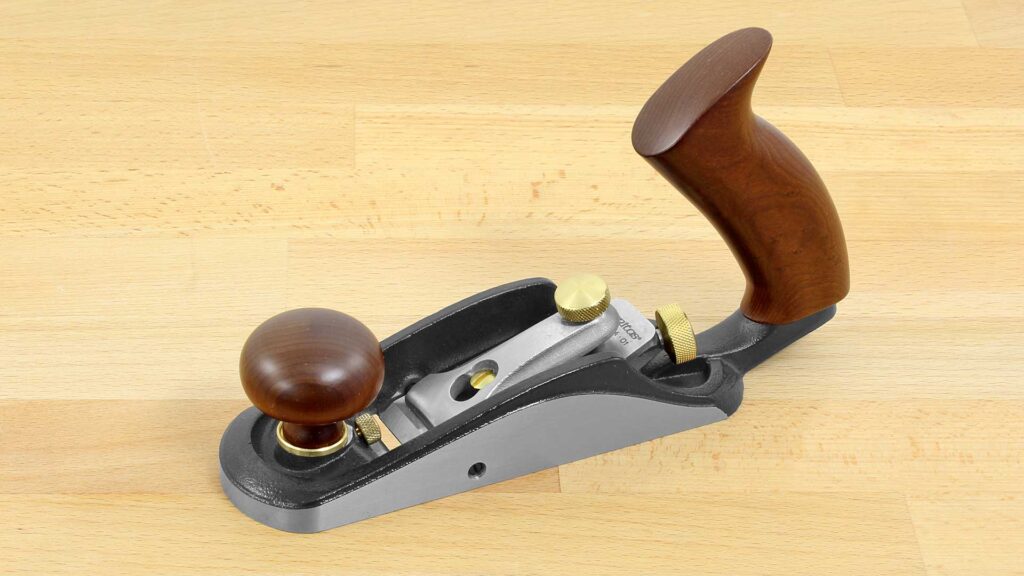
As the name suggests, the smoothing plane is primarily used to create a smooth, level finish on wood surfaces. It is typically the last plane used to refine the surface of an instrument after initial shaping. With a finely set blade and a high level of control, the smoothing plane is used to remove very fine shavings of wood, resulting in a smooth, even surface ideal for final finishing or sanding.
- Uses:
- Achieving a perfectly smooth surface on the top or back of a guitar or violin.
- Refining the final contours on an instrument’s neck or body.
- Preparing surfaces for final finish applications, such as varnishing or staining.
The smoothing plane allows for the creation of an exceptionally smooth surface, crucial for instruments that demand high levels of precision in their aesthetics and function.
Scraper Plane

The scraper plane is a specialized tool used for smoothing and fine-tuning. It is similar to a regular plane, but instead of a blade cutting wood, the scraper plane uses a specialized blade that scrapes off thin layers of wood. This allows the scraper plane to remove material from surfaces without the risk of tear-out or unwanted grain direction problems, which is particularly important when working with figured or delicate wood.
- Uses:
- Smoothing highly figured woods, such as flame maple or rosewood, where tear-out is a concern.
- Creating a fine, polished surface on highly sensitive areas, such as the top of a violin or guitar.
- Removing minor imperfections after initial smoothing or sanding.
Scraper planes excel in smoothing complex or figured wood surfaces, allowing the luthier to achieve a clean, refined finish without damaging the wood’s natural grain.
Violin Plane

The violin plane is a specialized tool used for the delicate task of shaping and refining the tops, backs, and ribs of stringed instruments like violins, cellos, and violas. These planes are small and feature a low-profile design to help with the precise, curved surfaces common in stringed instrument construction. The curved sole of the violin plane matches the curvature of the instrument, enabling more controlled material removal.
- Uses:
- Shaping the curved surfaces of violins, cellos, and other bowed instruments.
- Refining the contours of the instrument’s back, ribs, and top.
- Smoothing the internal areas of an instrument, such as inside the body, where the traditional plane cannot reach.
The violin plane is essential for the careful shaping and refinement of stringed instruments that require intricate, curved surfaces.
Key Factors to Consider When Choosing a Plane
When selecting a plane for luthiery, several factors need to be taken into account to ensure the tool is well-suited for the task at hand:
Blade Material and Hardness
Planes are typically made from steel or cast iron, with the blade material being one of the most important factors in their effectiveness. High-quality steel blades, such as those made from carbon steel or laminated steel, hold an edge longer and provide cleaner cuts. The hardness of the blade should be chosen based on the type of wood being worked, as harder woods require tougher steel for durability.
Blade Angle
The angle at which the plane’s blade is set can affect the type of cut produced. For softer woods, a lower blade angle (around 30°) works best, as it creates a smoother cut. For harder woods, a higher blade angle (45° to 50°) is used to avoid tear-out and ensure a cleaner cut. Luthiers often choose planes with adjustable blade angles to suit different materials and tasks.
Plane Size and Weight
The size and weight of the plane determine how easily it can be maneuvered. Smaller planes, like block planes, offer greater control for fine, detailed work, while larger planes, like the jack plane, are better suited for rough shaping and larger surfaces. The weight of the plane affects how much force is needed to push it through the wood, with heavier planes providing a more consistent cut but requiring more strength to operate.
Comfort and Handle Design
Comfort is an important consideration, as luthiers often work for extended periods. Ergonomic handles made from materials such as hardwood or plastic ensure that the plane can be comfortably gripped without causing fatigue. The design of the handle should provide enough control to maneuver the plane smoothly without losing grip.
Maintaining Planes for Longevity and Performance
Proper maintenance is essential to ensure that planes continue to perform at their best. Some key maintenance tips include:
- Sharpening: The blade of the plane must be regularly sharpened to maintain its cutting edge. A sharpening stone or honing compound is often used to keep the blade sharp and free from nicks.
- Lubrication: The moving parts of the plane, such as the lever cap and adjusting mechanism, should be lubricated regularly to ensure smooth operation.
- Cleaning: After use, the plane should be cleaned of any wood debris, sap, or rust to keep it in optimal condition. Cast iron planes, in particular, are prone to rust and should be wiped down with an oily rag to prevent corrosion.