
The Role of Knives & Scrapers in Luthiery
Knives and scrapers are tools designed for fine, controlled wood removal, making them indispensable for the final shaping, smoothing, and detailing of musical instruments. Unlike saws, chisels, or gouges that are used for more aggressive material removal, knives and scrapers allow for precision work that shapes, refines, and perfects the details of the instrument.
These tools are used for tasks such as:
- Smoothing and flattening surfaces – Ensuring a perfectly flat, even finish on the instrument’s body, fingerboard, or neck.
- Shaping edges – Refining the contours of an instrument’s body, neck, or headstock.
- Carving intricate details – Such as inlays, bindings, and decorative scrolls.
- Fine-tuning joint fits – Perfecting neck joints or body seams where precision is essential.
- Finishing touches – Refining the final aesthetic details to enhance the instrument’s visual appeal.
The ability to use knives and scrapers for subtle adjustments is what sets the professional luthier apart. The fine control these tools offer ensures that the luthier can achieve the smoothness, symmetry, and detail necessary for an instrument to not only perform well but also have a refined, polished appearance.
Types of Knives Used in Luthiery
Luthier’s Knife

The luthier’s knife is a specialized tool that typically has a small, thin blade designed for precision work. It comes in various forms, including straight-edged knives, curved knives, and scalpel-style knives, each suited to different types of cutting and carving tasks. Luthier’s knives are essential for making fine cuts in hard and soft woods, such as when trimming the edges of a fingerboard, carving delicate details, or cutting intricate inlays.
- Uses:
- Fine trimming and shaping of necks, bodies, and other components.
- Cutting binding channels or decorative inlays with sharp, clean lines.
- Carving delicate details like rosettes or sound holes on acoustic instruments.
The small, controlled nature of a luthier’s knife allows the artist to create smooth, clean cuts in tight spaces, making it perfect for the high-precision work needed when working on fine stringed instruments.
Skinning Knife
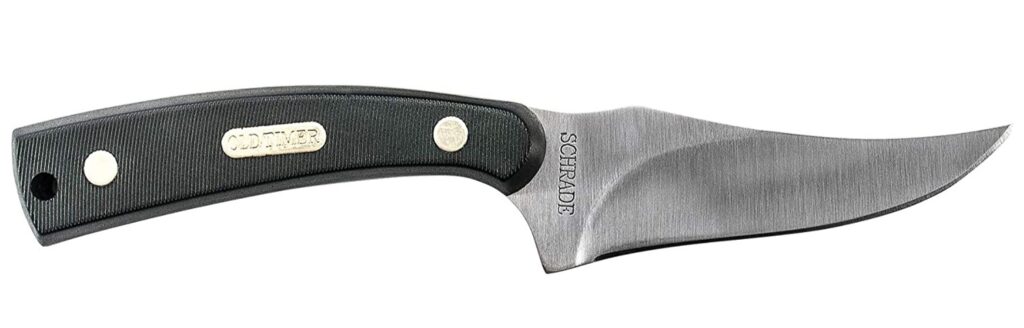
Although the skinning knife is traditionally used for removing animal hide, it has gained popularity in luthiery for its ability to carve and scrape delicate details. The blade on a skinning knife tends to be curved, allowing for smooth, sweeping cuts that can contour to the natural shape of the instrument being worked on.
- Uses:
- Used in shaping, especially on concave surfaces like the sides of violins, mandolins, and cellos.
- Great for smoothing and refining the body or neck after initial carving.
Due to its sharpness and curve, the skinning knife allows for precise carving of complex, curved surfaces, making it a helpful tool for refining the contours of the instrument’s body.
Utility Knives

Utility knives, often with replaceable blades, are used in luthiery for general cutting tasks. These knives are useful for scoring, trimming edges, or even performing light carving on instrument components.
- Uses:
- Cutting binding strips and purfling to the proper length and size.
- Scoring lines for inlays or shaping details before finer carving.
- Removing small amounts of wood in tight areas.
A utility knife’s versatility makes it a go-to tool for a range of smaller, detail-oriented tasks, especially when combined with a steady hand and careful technique.
Types of Scrapers Used in Luthiery
Scrapers are another essential tool for luthiers, particularly when it comes to smoothing and finishing. Unlike knives, scrapers are used for refining surfaces by scraping away thin layers of wood, often after the rough shaping has been completed. They can be used on both flat and curved surfaces, offering a level of control that ensures smoothness without gouging the wood.
Card Scraper
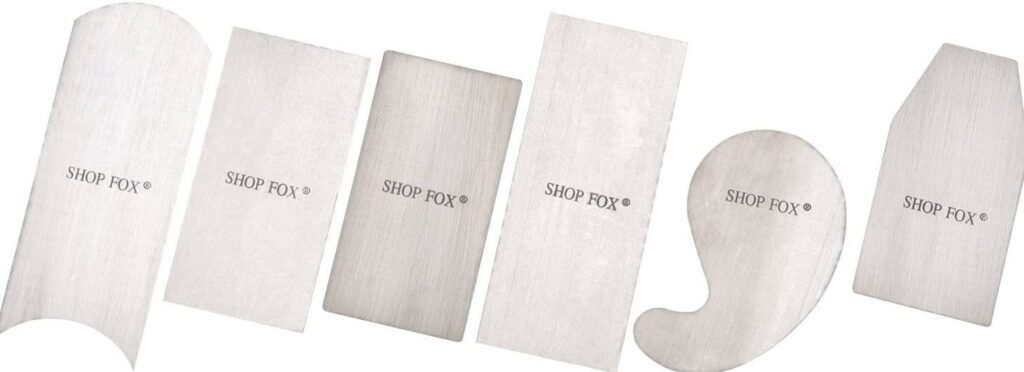
A card scraper is a flat piece of steel that is used for smoothing large, flat surfaces. When properly sharpened, the card scraper can remove thin shavings of wood, leaving behind a smooth finish. The scraper is typically held at a slight angle to the surface, and it works by scraping wood fibers from the surface, as opposed to cutting them like a knife.
- Uses:
- Smoothing and flattening the surface of the instrument after the initial shaping.
- Refining the edges and sides of guitar bodies or violin backs and tops.
- Removing minor imperfections and scratches left from other tools.
The card scraper is a crucial tool for achieving a high level of surface smoothness on an instrument, especially when preparing for final finishing and polishing.
Cabinet Scraper

A cabinet scraper is similar to the card scraper but is often larger and features a slightly different profile. It is designed for heavier-duty scraping and can be particularly useful when working with dense woods or larger surfaces, such as the back and sides of a guitar or the entire surface of a violin’s top.
- Uses:
- Smoothing and scraping the top or back of larger instruments.
- Fine-tuning the overall surface before applying finishes.
- Flattening the instrument’s body after initial rough carving.
The cabinet scraper’s ability to handle larger areas efficiently makes it a useful tool for smoothing the larger surfaces of an instrument, providing a clean, even texture.
Scraper Plane

The scraper plane is a more specialized tool used in luthiery, combining the benefits of both a plane and a scraper. It has a flat surface, like a plane, but uses a blade designed to scrape off thin layers of wood. This allows for precise control when smoothing and fine-tuning surfaces, particularly for large areas.
- Uses:
- Smoothing long surfaces of the instrument’s body.
- Creating even, consistent thickness for instrument tops and backs.
- Removing thin layers of wood to correct surface irregularities.
Because of its flat surface and scraping action, the scraper plane can handle both fine and more substantial material removal, making it versatile for both large and small-scale smoothing tasks.
Burnisher
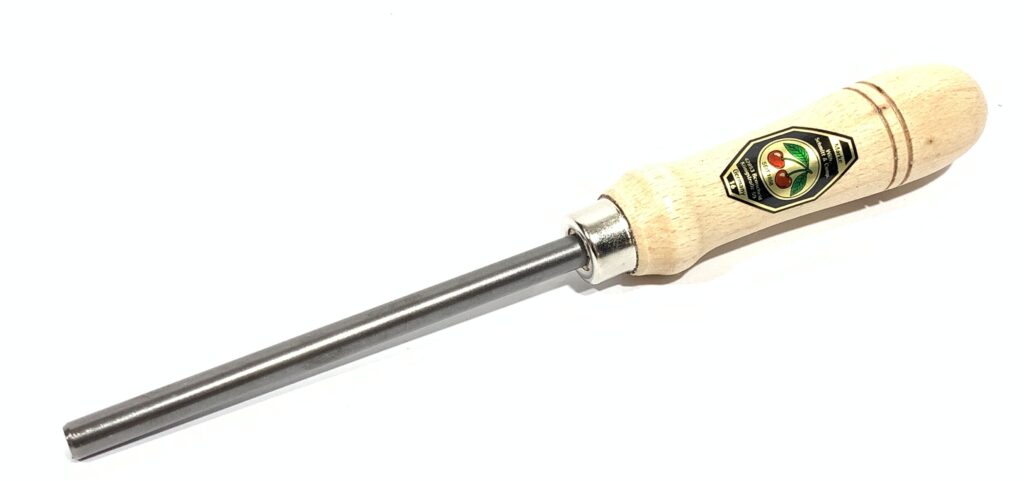
A burnisher is used to sharpen scrapers, especially card and cabinet scrapers, by turning the edge into a fine hook. This tool is typically made of hardened steel and is used to burnish the edge of a scraper to ensure it cuts smoothly and efficiently.
- Uses:
- Sharpening and honing the edges of scrapers to ensure clean cuts.
- Maintaining the performance of the scraper for long-lasting use.
While not directly used for carving or scraping, the burnisher plays an essential role in ensuring the scrapers perform at their best, making it a crucial tool for maintaining other scraper tools in the luthier’s kit.
Key Factors to Consider When Choosing Knives & Scrapers
When selecting knives and scrapers for luthiery, there are several factors that should be taken into consideration:
Blade Material
The quality of the blade material is essential for maintaining sharpness and durability. High-carbon steel blades are often favored because they are able to hold an edge longer. Stainless steel is also popular for its resistance to corrosion, but it may require more frequent sharpening.
Handle Design
The handle of a knife or scraper should be ergonomic and comfortable, as luthiers spend long hours using these tools. Handles made from hardwoods like beech or maple are common, as they are sturdy and comfortable for extended use. Handles should also provide a good grip to prevent slippage and ensure control.
Sharpness and Maintenance
Knives and scrapers must be kept sharp to ensure precision in cutting and scraping. Regular honing and sharpening are required, especially for knives, which should be maintained with a sharpening stone or honing rod. Scrapers should also be burnished regularly to keep their edges crisp.
Size and Shape
The size and shape of knives and scrapers should match the specific task at hand. Smaller knives are ideal for fine detailing and carving, while larger knives are suited for more substantial cuts. Scrapers with different profiles, such as flat, curved, or beveled, should be selected depending on the surface being worked on.