
Calipers in Luthiery: Precision Measuring for Fine Craftsmanship
Calipers are one of the most essential tools in a luthier’s workshop, allowing for precise measurements that directly affect the playability, tone, and durability of an instrument. Whether you are working on thicknessing tops and backs, measuring fretwire, or ensuring a properly fitted nut, calipers provide the accuracy needed to achieve professional results.
Types of Calipers Used in Luthiery
Different types of calipers serve specific functions in instrument making. Here are the most commonly used varieties:
Dial Calipers
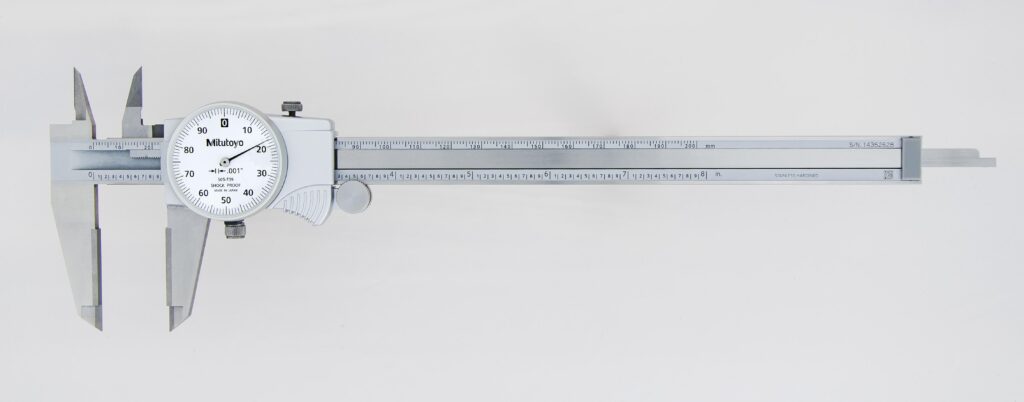
- Best for: Measuring nuts, saddles, fretwire, and small components with high precision.
- How it works: A dial indicator displays measurements as the jaws move apart.
- Advantages: Offers a clear, easy-to-read scale without requiring batteries.
- Precision: Typically measures in increments of 0.01 mm (0.001 inches).
Digital Calipers

- Best for: Quick and precise measurements of fret slots, neck profiles, and string gauges.
- How it works: An electronic display provides exact readings at the push of a button.
- Advantages: Instant conversion between metric and imperial units, and highly accurate readings.
- Precision: Reads down to 0.01 mm (0.0005 inches).
Vernier Calipers
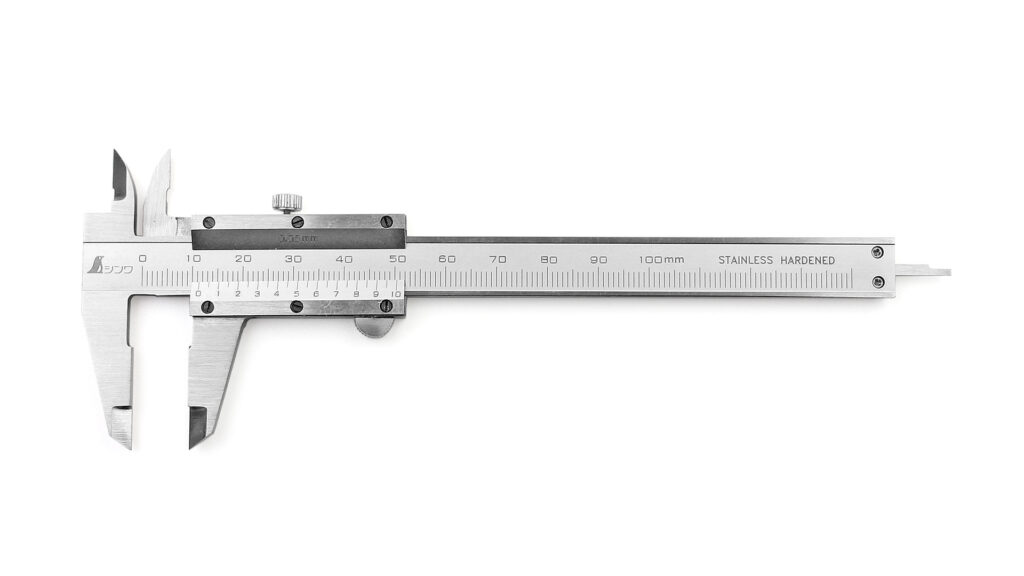
- Best for: Measuring wood thickness and hardware where precision is necessary but digital/dial calipers are not required.
- How it works: Uses a sliding scale with a vernier readout for precise manual measurements.
- Advantages: No batteries required, durable, and resistant to shop dust and debris.
- Precision: Generally accurate to 0.02 mm (0.001 inches).
Thickness Calipers (Specialized for Luthiery)
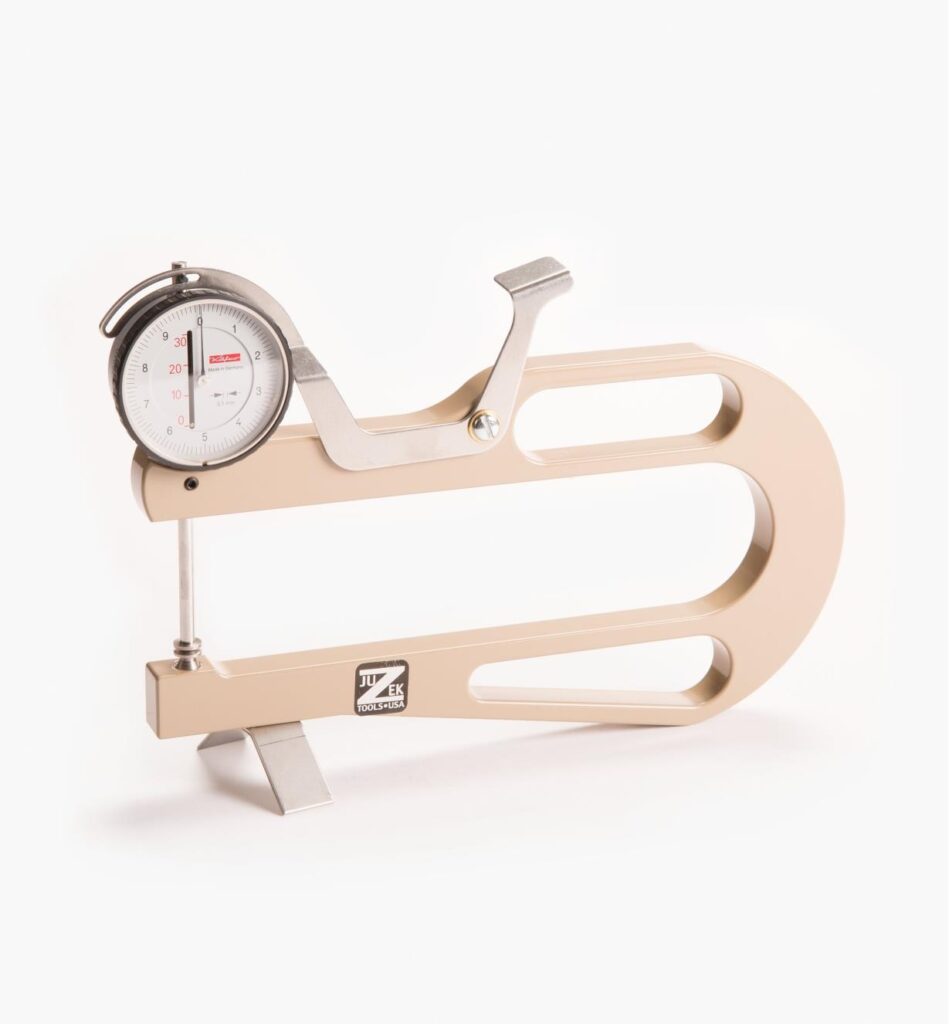
- Best for: Measuring wood thickness on guitar tops, backs, and sides.
- How it works: Designed with a deep throat and a dial gauge, allowing easy access to the middle of large wood pieces.
- Advantages: Ensures soundboards and bracing are properly thinned for optimal resonance.
- Precision: Accurate to 0.01 mm (0.001 inches).
String Action Gauge (Not a Caliper, but a Related Tool)
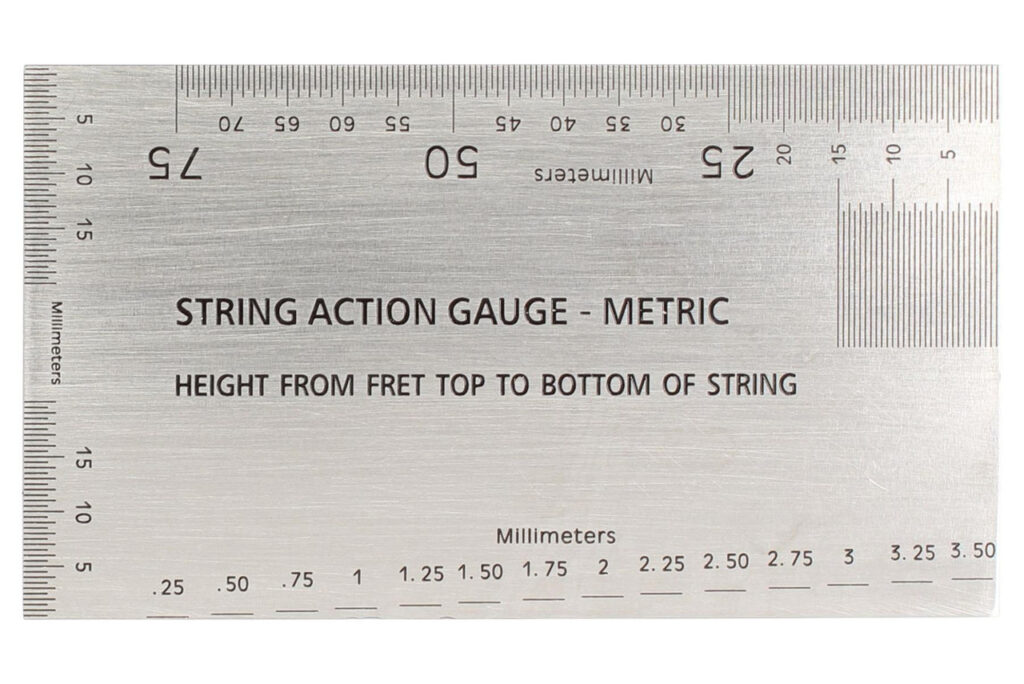
- Best for: Measuring string height at the nut and saddle to ensure proper action.
- How it works: A graduated scale with precise height markings.
- Advantages: Simple and quick to use for string and fret adjustments.
Applications of Calipers in Luthiery
Measuring Wood Thickness
For acoustic instrument building, ensuring the correct thickness of soundboards, backs, and sides is crucial. A thickness caliper allows luthiers to thin the wood to the right specifications, influencing tonal properties and structural integrity.
Checking Nut and Saddle Height
Calipers help measure and fine-tune nut and saddle dimensions to achieve the proper action. Even a fraction of a millimeter can make a difference in playability.
Fret Slotting and Fretwire Sizing
Precise fret slot widths ensure a secure fit for the fretwire. Calipers measure both the fret tang width and slot depth to ensure compatibility. Additionally, they help in determining the crown height for leveling and dressing frets.
Neck and Fingerboard Dimensions
Neck thickness and fingerboard radii must be consistent for playability and comfort. Calipers allow luthiers to check these measurements accurately during shaping and carving.
Fitting Tuning Pegs and Bridge Pins
Many hardware components, such as tuning machine shafts and bridge pin holes, require precise measurements to ensure a snug fit. Calipers help achieve tight tolerances without excessive sanding or reaming.
Choosing the Right Calipers for Luthiery
When selecting calipers for luthiery, consider the following factors:
- Accuracy & Resolution: A resolution of at least 0.01 mm (0.001 inches) is ideal for precision work.
- Build Quality: Stainless steel calipers offer durability, while plastic calipers may be suitable for occasional use.
- Depth & Jaw Size: For instrument building, calipers with a deep throat (such as thickness calipers) are beneficial for measuring large surfaces.
- Readability: Digital calipers provide instant readings, but dial and vernier calipers are more reliable in dusty environments.
Maintenance and Best Practices
- Keep them clean: Wood dust and glue residue can affect accuracy. Wipe calipers after each use.
- Store properly: Keep calipers in a protective case to prevent damage.
- Zero before use: Always check that digital or dial calipers are zeroed before measuring.
- Avoid excessive force: Apply gentle pressure to prevent deforming the material being measured.